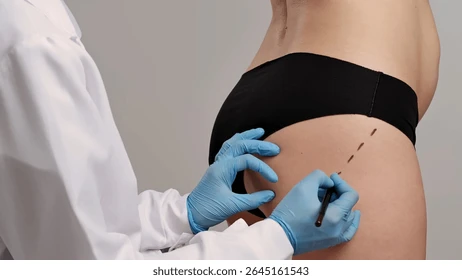

Social media has a way of making surgical results look like a weekend errand. The BBL, specifically, has been packaged and filtered into something that looks simple, low-risk, and almost casual. It is none of those things. That disconnect has sent many patients into consultations completely unprepared, expecting one thing and learning another. New York patients tend to do their research, but even well-researched patients often walk in with gaps. This post is about closing those gaps before a decision gets made, not after.
What a BBL in NYC Really Involves
A BBL in NYC is not a single action. It is two procedures running in sequence. First, liposuction removes fat from areas such as the abdomen, flanks, or lower back. That fat then gets processed and reinjected into the buttocks in precise, layered placements to build shape and projection. Because the material is the patient’s own fat, the body does not reject it the way it might a foreign implant. That is a genuine advantage. The results tend to age better, feel more natural, and carry fewer long-term complications than implant-based alternatives. Still, the fact that the body’s own tissue is involved does not make this procedure simple. It makes the technique more consequential.
The Surgeon Running the Procedure Changes Everything
Reputed surgeons like Sachin M. Shridharani, MD, FACS: LUXURGERY©, do not approach a BBL as a standardized service. Board-certified by the American Board of Plastic Surgery and with over 100 peer-reviewed publications to his credit, Dr. Shridharani treats each case as an individual anatomical problem to solve. The available donor fat, skin quality, natural proportions, and what the patient actually wants when they are honest about it all shape the surgical plan. Practices that run high volume and low customization tend to show it in their outcomes. The surgery itself takes real time and real judgment, and that only comes from a surgeon who is genuinely invested in the individual case.
Safety Is a Conversation, Not a Disclaimer
For a stretch of time, the BBL had one of the highest complication rates in elective surgery. Most of those complications traced back to technique, specifically fat being placed too deeply, near vascular structures that cannot tolerate it. The field responded. Updated protocols now direct surgeons to keep fat placement within the subcutaneous tissue layer, away from the deeper structures that caused fatalities in earlier years. Surgeons trained in current guidelines and formal gluteal anatomy perform this procedure in a fundamentally different way than those who are not. When sitting down for a consultation, ask about the technique directly. Ask where the fat is being placed and what training supports that approach. A provider who deflects that question or gives a vague answer is telling you something important.
Results Take Longer Than the Photos Suggest
Fat grafting has a biological reality that before-and-after galleries tend to skip over. A percentage of transferred fat does not survive. The body absorbs it in the weeks after surgery, and absorption is neither uniform nor predictable. Surgeons who know this account for it during the procedure, slightly overfilling to offset what will be lost. Even so, the final settled result takes months, not weeks. Swelling changes the shape. Positional asymmetry is common early on. Patients who judge their outcome at three weeks are almost always doing so too soon. Three to six months is a more honest timeline for seeing what the surgery actually produced.
Recovery Has Rules That Affect the Outcome Directly
This is the part that surprises people. BBL recovery is not just about discomfort management. It is about protecting fat cells during the window when they are establishing a blood supply. Direct pressure on the buttocks during that period can kill the transferred cells before they integrate. Patients avoid sitting directly on the surgical area for several weeks, use specialized cushions when they must sit, and sleep in modified positions. For someone with a desk job, a long commute, or travel planned, this is a real logistical challenge. Patients who do not follow post-operative positioning guidelines often end up with less volume and less symmetry than patients who do. Recovery compliance is part of what produces the result.
Not Every Patient Who Wants a BBL Should Get One
Candidacy for this procedure comes down to a few concrete factors. There must be enough donor fat to enable a meaningful transfer. Patients who are very lean may not qualify, or may qualify for a more limited result than they are imagining. Overall health must support a procedure that combines liposuction and fat grafting in a single session, which is a significant physical demand.
One Question Worth Asking Before You Leave the Room
Before walking out of any BBL consultation, ask the surgeon to describe exactly where the fat will be placed and what keeps that placement safe. The specificity of the answer will tell you more than any portfolio of results. Photos show outcomes. That answer reveals training.