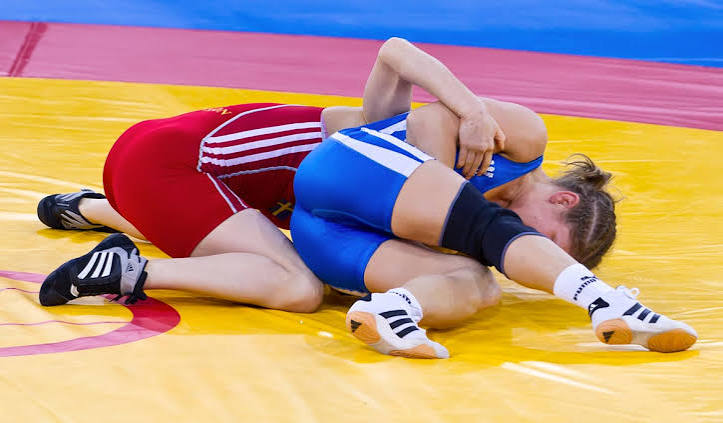

Wrestling is not only a contest of strength and technique. It is also a continuous decision-making process shaped by the score, the clock, position, fatigue, and the opponent’s habits. A wrestler who leads by four points with one minute remaining faces a different tactical problem from someone who trails by the same margin. The techniques available may be identical, but the value of each decision changes as the match develops.
This makes score awareness central to match management. Athletes must decide when to attack, when to control space, when to accept a low-value exchange, and when to take a risk. The logic resembles other environments built around changing probabilities, including products such as the crazy time website, where the meaning of a choice depends on the situation at the moment it is made. In wrestling, however, those decisions are physical, immediate, and directly connected to points, position, and remaining time.
A Level Score Encourages Controlled Pressure
When the score is tied, wrestlers usually have little reason to force attacks with poor setups. The priority is often to create pressure without giving the opponent an easy counter.
This can mean controlling the center, hand fighting, changing levels, and testing reactions before committing to a takedown. The aim is to gather information while keeping scoring options open.
A tied score also makes small positional errors important. Stepping too close to the boundary, reaching without balance, or forcing a weak shot can give the opponent the first scoring action. Once that happens, the tactical structure of the match changes.
For this reason, wrestlers often use the early part of an even match to establish patterns. They may repeatedly attack the same side, move the opponent toward one edge, or create reactions that can be exploited later.
A Small Lead Changes the Value of Risk
A wrestler leading by one or two points does not need to stop attacking, but the calculation becomes different.
The athlete must compare the potential reward of an attack with the cost of being countered. A low-percentage move becomes less attractive because giving away points could reverse the match.
This often produces more selective offense. Instead of attacking from distance, the leader may wait for better contact, stronger control, or an obvious defensive error.
Positioning also becomes more important. Staying near the center reduces the chance of conceding points through boundary situations. At the same time, the leader must remain active enough to avoid being judged passive.
The challenge is therefore to protect the advantage without becoming purely defensive.
A Large Lead Favors Control Over Volume
When a wrestler builds a substantial advantage, the clock becomes more valuable than another attack.
The leading athlete may slow the pace by maintaining strong contact, controlling ties, and forcing the opponent to spend energy creating openings. The goal is not to avoid action completely but to reduce the number of exchanges that could produce a swing in momentum.
A wrestler ahead by several points can also choose lower-risk techniques. Rather than attempting a move that exposes the back, the athlete may use pressure, snap-downs, or attacks that are easier to abandon safely.
This is where match intelligence becomes visible. The athlete who continues fighting as if the score were tied may create unnecessary opportunities for the opponent.
Trailing by One Point Requires Patience
Being one point behind does not automatically require an immediate attack.
If enough time remains, rushing can help the opponent. A wrestler who knows the opponent must score may wait for a predictable shot and prepare a counter.
The trailing athlete therefore needs to increase initiative without becoming obvious. Feints, hand fighting, and changes in direction can be used to make the opponent react before the real attack begins.
The objective is to create one clean scoring opportunity rather than several weak ones. This distinction becomes especially important late in a match, when every failed attempt uses time and energy.
A Larger Deficit Forces Higher-Risk Wrestling
The tactical structure changes sharply when a wrestler trails by several points with limited time remaining.
At that stage, safe one-point gains may no longer be enough. The athlete must search for actions that can produce multiple points or lead directly into another scoring sequence.
This can involve deeper attacks, throws, exposure attempts, or transitions that would be too risky in an even match.
The opponent knows this as well. That creates a second tactical layer. The leader expects more aggressive attacks and can prepare counters.
As a result, the wrestler who is behind must not simply increase effort. The athlete must increase scoring potential while remaining unpredictable.
Boundary Position Changes With the Score
The edge of the competition area becomes more important as the score changes.
A wrestler who is ahead generally wants to avoid situations near the boundary where a small positional error can concede a point. The safer approach is to control the center and make the opponent work from outside positions.
A trailing wrestler may do the opposite. Driving an opponent toward the edge can create a scoring opportunity without requiring a complete takedown.
This makes foot placement a tactical tool. Wrestlers constantly evaluate not only the opponent’s stance but also where both athletes are located relative to the boundary.
The same tie or underhook can have different value depending on whether the exchange happens in the center or one step from the edge.
The Clock Can Matter More Than the Score
A two-point deficit with three minutes remaining is very different from a two-point deficit with twenty seconds left.
Time determines how much risk is justified. Early in the match, an athlete can still build attacks, study reactions, and recover from a failed attempt. Late in the match, those options disappear.
Leaders also use time differently. They may force longer hand-fighting exchanges, make the opponent restart attacks, or control positions that consume seconds without creating danger.
Good wrestlers therefore monitor the clock almost as closely as the score. Tactical decisions are based on both variables at once.
Fatigue Alters Score-Based Decisions
Score management becomes harder when athletes are tired.
A wrestler who is behind may know that an attack is necessary but lack the energy to complete it. A wrestler who is ahead may plan to defend but lose stance quality as fatigue increases.
This is why conditioning has a tactical purpose. Fitness does not only help an athlete perform more actions. It allows the athlete to execute the correct strategy late in the match.
Fatigue can also make an opponent more predictable. A tired wrestler may stop circling, react more slowly to feints, or defend attacks with the same pattern. Skilled competitors use these changes when choosing when to increase pressure.
Score Awareness Is Part of Wrestling Skill
The best tactical choice in wrestling is rarely independent of context. A technique that makes sense early in a tied match may be unnecessary when leading. A move that seems too risky under normal conditions may become essential when trailing late.
Wrestlers therefore need more than a collection of attacks and defenses. They need to understand the value of those techniques under different score situations.
This is why match simulations are so important in training. Coaches can place athletes in specific scenarios, such as leading by two points with thirty seconds left or trailing by four with one minute remaining. The athlete then learns not only how to wrestle, but how to make decisions under pressure.
At higher levels, these decisions often separate athletes with similar physical ability. Score management turns technique into strategy, and strategy determines when to protect, when to pressure, and when to take the risk required to change the match.