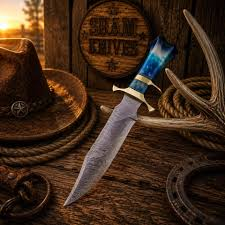

The cowboy became a symbol of independence long before social media turned the rugged aesthetic into a trend. Western films, television dramas, classic illustrations, and popular music helped transform the working cowboy into a globally recognized figure. The cowboy knife became part of that visual identity, representing a practical tool within stories defined by vast landscapes, tough choices, and strong individual personalities.
Its cultural appeal transcends any specific blade shape. The cowboy knife is linked to broader concepts of Western life, where tools are closely tied to one’s work, reputation, and ability to handle a demanding environment. Over time, these associations helped the design transition from a purely practical context into the realms of collecting, fashion, and modern visual culture.
Cowboy Knives and the Power of Western Storytelling
Western stories rarely rely solely on dialogue. Clothing, saddles, boots, landscapes, and carefully chosen objects help establish the atmosphere before a character even speaks. A traditional knife can serve as one of these visual details, reinforcing the connection to a rural or frontier-inspired setting.
In film and television, cowboy knives often appear alongside other instantly recognizable Western elements. The overall effect depends on how the story utilizes the object. A simple, utilitarian-looking knife might help flesh out a character’s background, while an ornate display piece could signal status or an appreciation for craftsmanship.
However, on-screen imagery does not always accurately reflect historical reality. Entertainment often simplifies various eras and regional traditions to create an instantly recognizable Western style. The cultural image of the cowboy is, therefore, a blend of history, storytelling, and creative interpretation.
It is precisely this blend that creates the appeal. Audiences do not need to study the technical history of a knife to recognize its connection to the frontier; its shape and appearance can convey a familiar atmosphere in a matter of seconds. Modern cowboy knives have benefited from this exposure, yet their real-world quality must be evaluated independently of how impressive similar items appear on screen.
The Distinction Between History and Hollywood
Western entertainment has cultivated memorable imagery, but dramatic storytelling often prioritizes visual impact over historical accuracy. Characters may carry gear chosen for its aesthetic appeal, while costume and prop designers blend influences from various eras to forge a stronger on-screen identity.
This does not diminish the appeal of the resulting designs. It simply means that cowboy knives seen in fictional settings should not automatically be regarded as historically accurate examples. This distinction is crucial when contemporary products are marketed as authentic reproductions of vintage designs.
Knives inspired by classic films remain compelling because they capture the story’s atmosphere. However, their value lies in their design, materials, construction, and accurate description, rather than in unverified claims regarding their historical origins.
The image of the West has also evolved across generations. Early stories often emphasized survival and conflict, whereas more recent interpretations might explore personal identity, family traditions, the changing nature of rural communities, or the tension between old customs and modern life. The objects associated with cowboys have evolved alongside these narratives.
This evolution has helped keep traditional Western designs relevant, even as public understanding of the frontier has grown more complex.
A Style That Permeates Modern Culture
The influence of Western design extends far beyond film. It is evident in clothing, furniture, interior design, music merchandise, handcrafted accessories, and collectibles. Its appeal typically stems from a combination of recognizable forms, tactile materials, and a sense of history. Cowboy knives fit seamlessly into this cultural landscape because their appearance conveys a strong sense of identity. Traditional handle shapes, leather accents, and simple blade profiles reinforce the same visual language found in Western-style boots, belts, and furniture.
For some, the appeal lies in an interest in the outdoors. Others appreciate the craftsmanship, while some value the design simply because it feels distinct from contemporary products characterized by sleek surfaces and minimalist branding.
Damascus knives offer a unique yet complementary visual appeal. The flowing steel patterns can make the blade appear almost like an ornamental object, especially when paired with an understated Western-style handle. This combination bridges familiar cultural symbols with the visual allure of modern patterned steel.
However, visual appeal should not be equated with practical suitability. An object designed primarily for display may have different priorities than a product intended for daily use; they may look alike despite differences in construction and intended purpose.
Why Makers Focus on Visual Identity
In a crowded market, a recognizable design helps a product stand out. Since many objects share similar functions, buyers often look for details that reflect a specific character or personality. Cowboy-style knives have an advantage here, as Western stylistic influences are easily recognized without the need for lengthy explanations.
Makers express this identity in various ways. Some maintain an understated design, utilizing familiar proportions and simple finishes. Others draw attention through intricate carvings, distinctive handle materials, or patterned steel. The strongest designs are those that establish a clear visual direction rather than simply combining every available decorative element.
Consistency is also crucial. Makers who develop a signature approach to handles, finishes, and blade shapes can build a stronger identity than those who rely solely on decoration. This applies to a wide range of handcrafted goods, where the relationship between design and craftsmanship often contributes to long-term product recognition.
For cowboy-style knives, branding must not overshadow the substance of the product itself. A familiar Western-style name or a striking logo does not guarantee that the materials and craftsmanship meet high standards. Clear product descriptions, reliable construction, and honest statements regarding a product’s origins remain more significant than mere visual style.
The same applies to Damascus knives. While flowing patterns can make a product stand out, the quality of the steel and the manufacturing process must match that visual appeal.
Traditional Materials Create an Emotional Connection
Part of the appeal of Western-style items stems from the texture and appearance of their materials. Wood grain, leather, steel, and meticulously finished surfaces can evoke a sense of warmth distinct from that of purely synthetic or disposable products. These materials also evolve in appearance over time, shaped by the care they receive.
In cowboy-style knives, the use of natural-looking materials often reinforces a connection to traditional craftsmanship. Wooden handles feature unique grain patterns, while leather sheaths develop their own surface character over time. Synthetic alternatives offer their own advantages, including consistency and resistance to specific types of wear.
No single material makes one knife inherently superior to another; the final result depends on how the components are selected, assembled, and finished. A practical design might prioritize durability and ease of maintenance, whereas a collector’s knife might emphasize aesthetics and visual uniqueness.
Damascus steel adds another dimension, as its patterns create a sense of dynamism and contrast on the blade. When other design elements are kept simple, the pattern can serve as the primary visual draw without compromising the object’s inherent Western character.
These details explain why traditional styles remain popular among those who value craftsmanship and personal expression.
An Enduring Legend in a New Era
The image of cowboy culture has evolved, yet it continues to shape public perceptions of independence, work ethic, and traditional craftsmanship. The cowboy knife remains integral to this image, blending an iconic design with the broader narrative of life on the frontier.
Its modern appeal does not rely on the notion that the past was simpler or that every contemporary product must be historically authentic. Instead, that appeal stems from how makers and collectors reinterpret familiar forms to resonate with new audiences. Some appreciate understated designs, while others prefer the use of modern materials and Damascus patterns.
This balance between heritage and innovation ensures the enduring relevance of Western-style knives.A recognizable silhouette can carry historical associations while its materials and finish reflect current craft techniques. The design remains familiar, but it does not have to remain frozen.