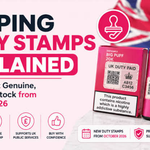

UK vape retailers are preparing for another major change. From 1 October 2026, a new Vaping Products Duty will apply at £2.20 per 10ml of vaping liquid, alongside new rules for vaping duty stamps.
For retailers, the change is about more than a new tax. Shops and wholesalers will need to understand which products should carry a stamp, how existing unstamped stock can be handled and what to check when buying new vape products.
The transition will run for several months, so stamped and unstamped products may both appear in the supply chain for a time. Knowing the key dates can help retailers avoid confusion and manage stock more carefully.
What Changes on 1 October 2026?
The UK Vape Duty 2026 rules begin on 1 October.
Vaping Products Duty will apply to vaping liquids produced in or imported into the UK. It covers both nicotine and nicotine-free vaping liquids.
The duty rate is £2.20 for every 10ml of liquid, which works out at 22p per 1ml.
Products released onto the UK market under the new rules will also need the required vaping duty stamp on their retail packaging.
Retailers and wholesalers that simply buy and sell duty-paid products do not normally need to apply for approval themselves. Their main responsibility is to make sure the stock they buy is legitimate and meets the rules that apply at that time.
How Is Vape Duty Calculated?
The duty is based on the amount of vaping liquid rather than the strength of nicotine.
For example, a 2ml prefilled pod would carry 44p of Vaping Products Duty:
2ml × 22p = 44p
A 10ml bottle would have £2.20 of duty.
This means different vape formats may carry different total duty amounts depending on how much liquid they contain.
For retailers, understanding this calculation can also make future price changes easier to understand. Suppliers may need to account for the new duty when setting prices for pods, bottles and other liquid-containing products.
Can Retailers Sell Old Vape Stock?
Yes, but there are important conditions.
Eligible products that were produced or imported before 1 October 2026 can continue to be stored and sold without a vaping duty stamp until 31 March 2027.
This grace period is designed to give retailers and wholesalers time to work through older stock that was already in the supply chain.
However, retailers should not assume that every unstamped product offered after 1 October is old stock.
If a supplier offers unstamped products during the transition period, the retailer should be satisfied that there is a legitimate reason why the products do not carry a stamp. Good invoices, delivery records and information about when the products entered the supply chain can become particularly useful during this period.
If the position is unclear, it makes sense to resolve the issue before buying the stock.
Why Prefilled Pods Need Attention
The UK vape market has already changed significantly since the ban on single-use vapes came into force in June 2025.
Reusable vape products need to meet different requirements from the disposable products that previously dominated many shop shelves. For pod-based devices, retailers also need to think about the availability of compatible refills.
That makes the buying decision wider than simply choosing a popular device.
When considering reusable prefilled pod kit ranges, retailers may want to check the device format, compatible pods, stock availability and how replacement products fit into the range.
Vaping Products Duty adds another consideration because the liquid inside prefilled pods falls within the new duty system.
The hardware and the liquid therefore need to be understood separately. A rechargeable device may be reusable, while the prefilled pods used with it contain the liquid on which duty is calculated.
Check Replacement Pods Too
Replacement stock is an important part of managing a reusable pod range.
A shop may have the device available, but customers also need access to the correct replacement format. For prefilled systems, this means retailers should know which prefilled replacement pods work with the devices they stock.
This becomes especially important when new duty rules are being introduced.
Before ordering a pod range, retailers can make a few simple checks:
- Is the device rechargeable and designed for continued use?
- Are compatible replacement pods available separately?
- Does new stock carry a duty stamp where required?
- Is there clear evidence for older unstamped stock?
- Can the supplier provide normal invoices and delivery records?
These are practical checks rather than complicated changes to everyday retailing. They can also help a business understand where its products came from and which rules apply to them.
What Are Vape Duty Stamps?
Vaping duty stamps are used to show that products entering the UK market have been handled under the new duty system.
The stamp is attached to the outer retail packaging. It is designed so that opening the package damages either the packaging or the stamp.
From 1 October 2026, newly manufactured or imported vaping products released for the UK market will generally need the appropriate duty stamp.
During the transition, retailers may therefore see both stamped and legitimately unstamped products on their shelves.
That difference does not automatically mean that an unstamped product is non-compliant. The date it was produced or imported matters.
This is one reason clear stock records are likely to become more important during the six-month transition.
What Should Retailers Check?
Retailers do not need to turn every delivery into a complicated compliance exercise.
A few consistent checks can make stock management much easier.
When buying new products, check whether a duty stamp should be present and whether the packaging appears normal. Keep invoices and delivery notes, and use suppliers that can provide clear information about their products.
Extra care may be needed when unstamped products are offered after 1 October.
Retailers should be able to understand why those products are unstamped and whether they fall within the grace period.
It is also worth reviewing older inventory before the transition ends rather than leaving large amounts of unstamped stock until the last few weeks.
What Changes From April 2027?
The grace period ends on 31 March 2027.
From 1 April 2027, vaping products held outside duty suspension in the UK must carry a valid vaping duty stamp. Retailers should not continue selling unstamped products after that date.
That gives businesses six months from the start of UK Vape Duty 2026 to manage qualifying older stock.
For shops, the simplest approach is to identify older inventory early, keep useful purchase records and gradually reduce any eligible unstamped stock before the deadline arrives.
The move to Vaping Products Duty is another significant change for the UK vape sector, but the main retail requirements are relatively clear when broken down into steps.
Know the key dates, understand which products should be stamped, keep reliable supplier records and pay particular attention to pod systems where devices and replacement stock need to work together.
Retailers that start those checks early should find the changeover easier to manage than those that wait until the grace period is almost over.